
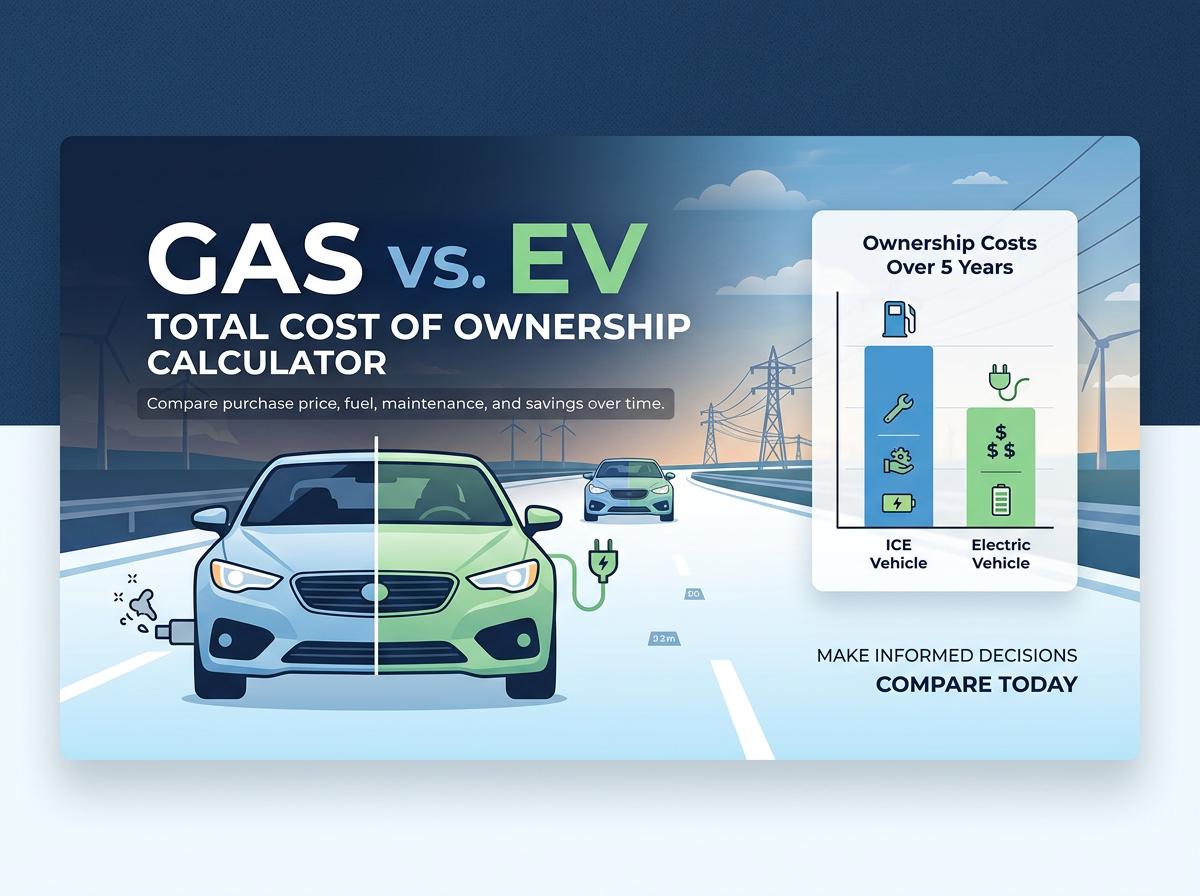

Compare the true cost of driving! Use our free Gas vs. EV Total Cost of Ownership Calculator to estimate fuel, maintenance, tax incentives, and long-term expenses. Find out which vehicle type saves you the most money over time and make an informed buying decision today.
Gas vs. EV Total Cost of Ownership
Gas Vehicle
Electric Vehicle
Gas Cost Breakdown
EV Cost Breakdown
How do upfront purchase prices compare after applying EV tax incentives?
Historically, Electric Vehicles (EVs) have a higher initial Manufacturer's Suggested Retail Price (MSRP) than Internal Combustion Engine (ICE) vehicles. However, federal and state tax incentives significantly close this gap. In the U.S., a federal tax credit of up to $7,500 can currently be applied directly at the point of sale for qualifying EVs. When combined with state rebates and local incentives, the upfront cost of an EV can often rival or even undercut the purchase price of comparable gas-powered models.
What is the average monthly cost difference between gasoline and electricity?
Charging an EV at home is generally much cheaper than fueling a gas car. Exact savings depend heavily on local utility rates, driving habits, and fluctuating gas prices, but the table below illustrates a typical average comparison:
| Fuel Type | Estimated Cost per Mile | Average Monthly Cost (1,000 miles) |
|---|---|---|
| Electricity (Home Charging) | $0.04 - $0.06 | $40 - $60 |
| Gasoline ($3.50/gallon, 25 MPG) | $0.14 | $140 |
On average, EV drivers can expect to save around $80 to $100 per month on fuel costs.
How much money is saved annually on routine maintenance with an EV?
EV owners save an average of $300 to $400 annually on routine maintenance compared to gas vehicle owners. This is because electric vehicles have far fewer moving mechanical parts.
By driving an EV, you completely eliminate the need for:
- Routine oil changes and oil filter replacements
- Spark plug replacements
- Transmission fluid flushes
- Engine air filter changes
Additionally, EVs use regenerative braking, which significantly extends the lifespan of traditional brake pads and rotors, leading to even fewer trips to the mechanic.
What is the potential cost of an out-of-warranty EV battery replacement?
An out-of-warranty EV battery replacement is one of the most significant expenses an owner can face, typically ranging from $5,000 to $20,000. The exact price depends on the vehicle's make, model, and the kilowatt-hour (kWh) capacity of the battery pack. Fortunately, federal regulations require manufacturers to provide a warranty for EV batteries covering at least 8 years or 100,000 miles, meaning full out-of-pocket replacements are relatively rare for newer vehicles.
Do electric vehicles generally cost more to insure than gas cars?
Yes, electric vehicles generally cost more to insure than gas-powered cars. On average, EV insurance premiums are 15% to 25% higher. This price discrepancy is driven by several key factors:
- Higher Upfront Value: EVs typically have a higher MSRP.
- Expensive Parts: Battery packs are highly expensive to replace if damaged in a collision.
- Specialized Labor: Repairing an EV requires technicians with specialized electrical safety training.
- Longer Repair Times: A lack of specialized body shops can lead to longer periods requiring rental coverage.
Which vehicle type retains a higher resale value over a five-year period?
Historically, traditional gas-powered vehicles have retained a higher resale value over a five-year period. In recent years, electric vehicles have experienced steeper depreciation curves. This faster depreciation for EVs is largely due to:
- Rapid advancements in battery and range technology, making older models obsolete faster.
- Aggressive price cuts on brand-new EV models by major manufacturers.
- Consumer concerns regarding long-term battery degradation.
While gas cars hold value better right now, this trend may stabilize as the EV market matures and used-EV tax credits become more widely utilized.
Are there additional annual state registration fees for electric cars?
Yes, many U.S. states impose additional annual registration fees specifically for electric vehicles. Because EV owners do not purchase gasoline, they do not pay traditional state fuel taxes—which are primarily used to fund road maintenance and highway infrastructure. To recoup this lost revenue, states implement special EV registration surcharges. These additional fees vary widely by location, typically ranging from $50 to over $200 per year, which is added to standard vehicle registration costs.
How much does it cost to purchase and install a home charging station?
Installing a Level 2 home charging station involves both hardware and professional labor costs. While standard Level 1 charging (using a regular 120V outlet) requires no installation, a 240V Level 2 charger is highly recommended for faster overnight charging.
| Level 2 Hardware | $300 - $700 |
| Electrician Installation | $500 - $1,500+ |
| Total Estimated Cost | $800 - $2,200 |
Costs can push higher if your home's electrical panel is outdated and requires a major amperage upgrade to support the charger.
How do long-term mechanical repair costs compare between the two?
Over the long term, electric vehicles generally incur lower mechanical repair costs than gas vehicles. EVs lack a complex combustion engine, transmission, exhaust system, and fuel pump, meaning there are simply far fewer mechanical components that can fail as the car accumulates high mileage. However, while EVs experience fewer breakdowns, the repairs they *do* require (such as intricate electrical system or thermal sensor replacements) can be more expensive due to the need for highly specialized diagnostics and technicians. Overall, the reduced frequency of repairs makes EVs cheaper to maintain long-term.
Do auto loan interest rates differ for electric versus gas vehicles?
Generally, auto loan interest rates do not differ significantly between electric and gas vehicles. Lenders primarily base interest rates on the borrower's credit score, loan term length, and down payment amount rather than the powertrain type. However, some financial institutions and credit unions offer specialized "green auto loans" that provide slightly discounted interest rates (often 0.25% to 0.50% lower) to incentivize eco-friendly purchases. Conversely, because EVs often have higher purchase prices, the overall amount of interest paid over the life of the loan may be higher.
Sources:
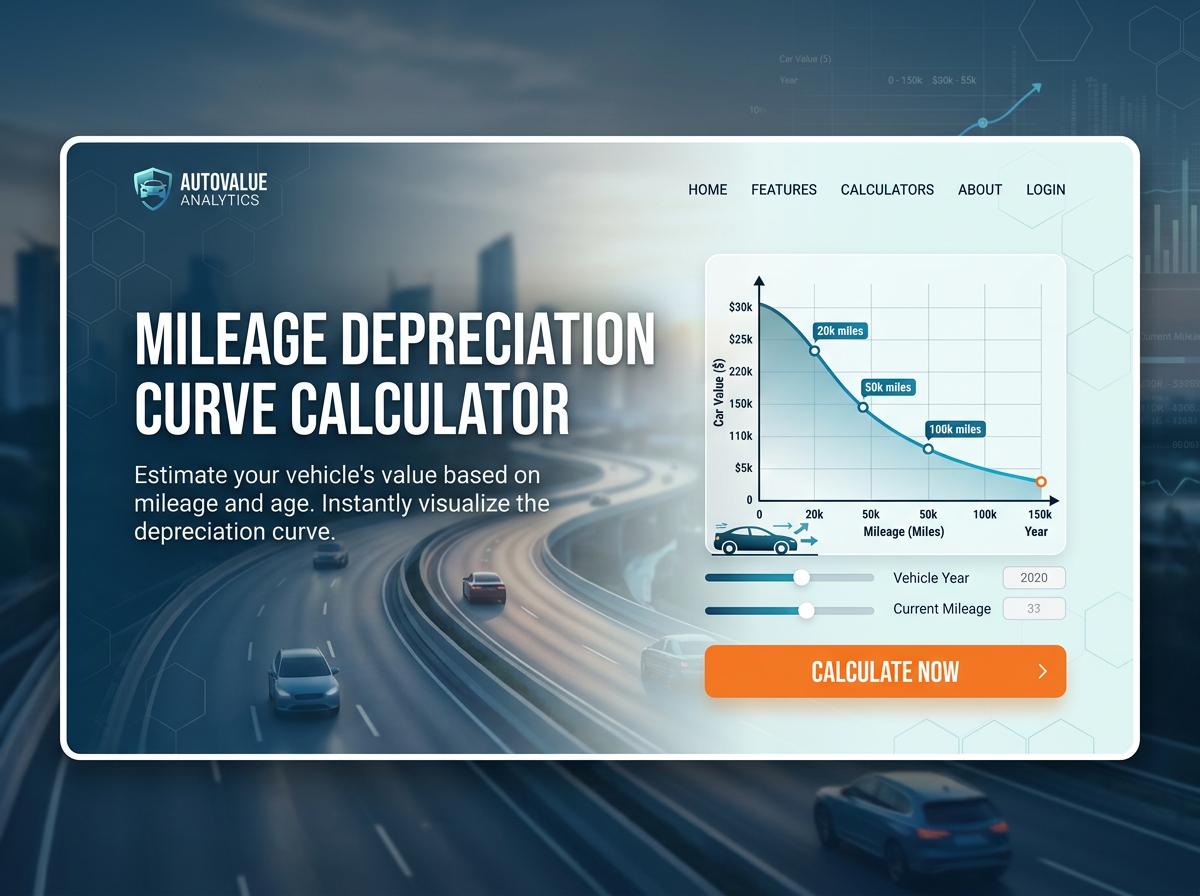 Mileage Depreciation Curve Calculator