

Avoid unexpected charges with our free Buy Now, Pay Later (BNPL) Late Fee Calculator. Instantly estimate missed payment penalties, compare top providers, and protect your budget today.
BNPL Late Fee Calculator
How much is the standard late fee for a missed payment?
The standard late fee for a missed payment varies significantly depending on the financial institution or service provider. Here is a general breakdown:
- Credit Cards: Typically range from $29 for a first-time offense up to $40 for subsequent missed payments within six billing cycles.
- Buy Now, Pay Later (BNPL) Services: Often charge a flat fee ranging from $7 to $15 per missed payment (e.g., Afterpay, Sezzle), while some providers like Affirm may charge $0 depending on loan terms.
- Personal Loans: Usually charge a flat fee of $15 to $30 or a percentage of the monthly payment (often around 5%).
Always review your specific cardholder or loan agreement to confirm the exact penalty amount.
Is there a grace period before the late fee is officially applied?
Yes, most lenders and service providers offer a grace period before officially applying a late fee, though the duration varies by product:
- Credit Cards: There is usually no grace period for late fees; if you miss the specific due date by even one day, the fee applies.
- BNPL Services: Commonly offer a 2 to 10-day grace period. For example, some platforms give a 10-day window before a late fee is added to your balance.
- Personal and Auto Loans: Often provide a 10 to 15-day grace period after the official due date before penalizing the borrower.
If you pay the balance within this specific window, your account remains in good standing without penalty.
Is there a maximum cap on total late fees per purchase?
Yes, there is usually a maximum cap on total late fees, heavily regulated by consumer protection laws and internal company policies.
For Buy Now, Pay Later (BNPL) services, late fees are generally capped to prevent the fee from exceeding a significant portion of the original purchase. A common industry standard caps total late fees at 25% of the total order value or a specific flat amount (e.g., $24 total), whichever is lower.
For Credit Cards, federal regulations dictate that a late fee cannot exceed the amount of the minimum payment due. Therefore, if your minimum payment is $25, the late fee cannot be more than $25.
Can multiple late fees be charged for a single missed installment?
Typically, you cannot be charged multiple late fees for a single missed installment. Lenders usually apply only one late fee per missed deadline.
However, the situation changes if you miss multiple distinct installments:
- If you miss Installment A, you incur one late fee.
- If you later miss Installment B, you will receive a second late fee for that specific missed deadline.
Additionally, while you won't get multiple late fees for a single missed deadline, failing to pay a credit card minimum over consecutive months can trigger recurring monthly late fees until the account is brought current.
Will getting a late fee trigger a negative mark on my credit score?
Receiving a late fee does not immediately trigger a negative mark on your credit score. Credit reporting agencies have strict timelines regarding delayed payments.
- Under 30 Days Late: If you incur a late fee but pay the balance before hitting the 30-day mark, it will not be reported to the credit bureaus. Your score remains unaffected.
- Over 30 Days Late: Once a payment is 30, 60, or 90 days past due, the lender can report the delinquency to major bureaus (Experian, Equifax, TransUnion). This will cause a significant drop in your credit score.
Note that many smaller BNPL services do not report to credit bureaus at all, meaning standard late fees there might never impact your credit.
Do unpaid late fees incur additional interest over time?
Whether unpaid late fees accrue interest depends entirely on the type of financial product you are using:
| Financial Product | Does it Accrue Interest? |
|---|---|
| Credit Cards | Yes. Unpaid late fees are added to your overall revolving statement balance. If you do not pay the balance in full, the fee itself will begin accruing compound interest at your standard APR. |
| BNPL Services | Generally, no. Most "Pay in 4" services do not charge interest, meaning your late fee remains a flat, fixed penalty that will not grow over time. |
| Personal Loans | Typically, no. Late fees are usually assessed as separate, non-interest-bearing charges. |
Can a late fee be waived if I accidentally missed the deadline?
Yes, many financial institutions and service providers are willing to waive a late fee if you accidentally missed the deadline, especially if you have a strong history of on-time payments.
To request a waiver, follow these steps:
- Pay the overdue balance immediately (excluding the late fee).
- Call customer service or use the lender's live chat feature.
- Politely explain the situation (e.g., auto-pay failed, you simply forgot the date) and ask for a one-time courtesy waiver.
Most credit card issuers and BNPL providers have internal policies that allow customer service representatives to grant at least one fee waiver per year for accounts in good standing.
Will an unpaid late fee freeze my account from making future purchases?
Yes, having an unpaid late fee or a past-due balance will frequently result in an account freeze, blocking you from making future purchases.
- BNPL Services: Providers will immediately pause your account the moment a payment is missed. You will not be able to initiate any new orders until the overdue installment and associated late fees are paid in full.
- Credit Cards: A single late fee won't automatically freeze your card unless the missed payment pushes you over your credit limit or your account becomes severely delinquent (usually 60+ days past due).
Once the balance and fees are settled, most services will automatically unfreeze your purchasing privileges.
Are late fees calculated as a flat rate or a percentage of the balance?
Late fees can be calculated using either method, depending heavily on the lender and the specific financial product.
| Method | Common Usage | Example |
|---|---|---|
| Flat Rate | Credit Cards, BNPL, Auto Loans | A strict $29 charge on a credit card, or an $8 charge for a missed BNPL installment, regardless of the purchase size. |
| Percentage | Personal Loans, Mortgages, B2B | A charge of 5% of the overdue monthly payment amount. If a $1,000 mortgage payment is late, the fee is $50. |
In many consumer loans, agreements stipulate a "lesser of" or "greater of" rule, such as "5% of the payment amount or $15, whichever is greater."
What happens if an unpaid late fee gets sent to a debt collections agency?
If an unpaid balance, including accumulated late fees, is sent to a debt collections agency, you will face several serious consequences:
- Severe Credit Damage: The account will be marked as a "Charge-Off" or "In Collections," which can remain on your credit report for up to seven years, severely damaging your credit score.
- Collection Efforts: You will begin receiving letters and phone calls from third-party debt collectors attempting to recover the money.
- Potential Legal Action: For substantial amounts, the collection agency may file a lawsuit against you to obtain a wage garnishment or bank levy.
- Loss of Service: You will be permanently banned from using the lender or BNPL service that issued the original debt.
Sources:
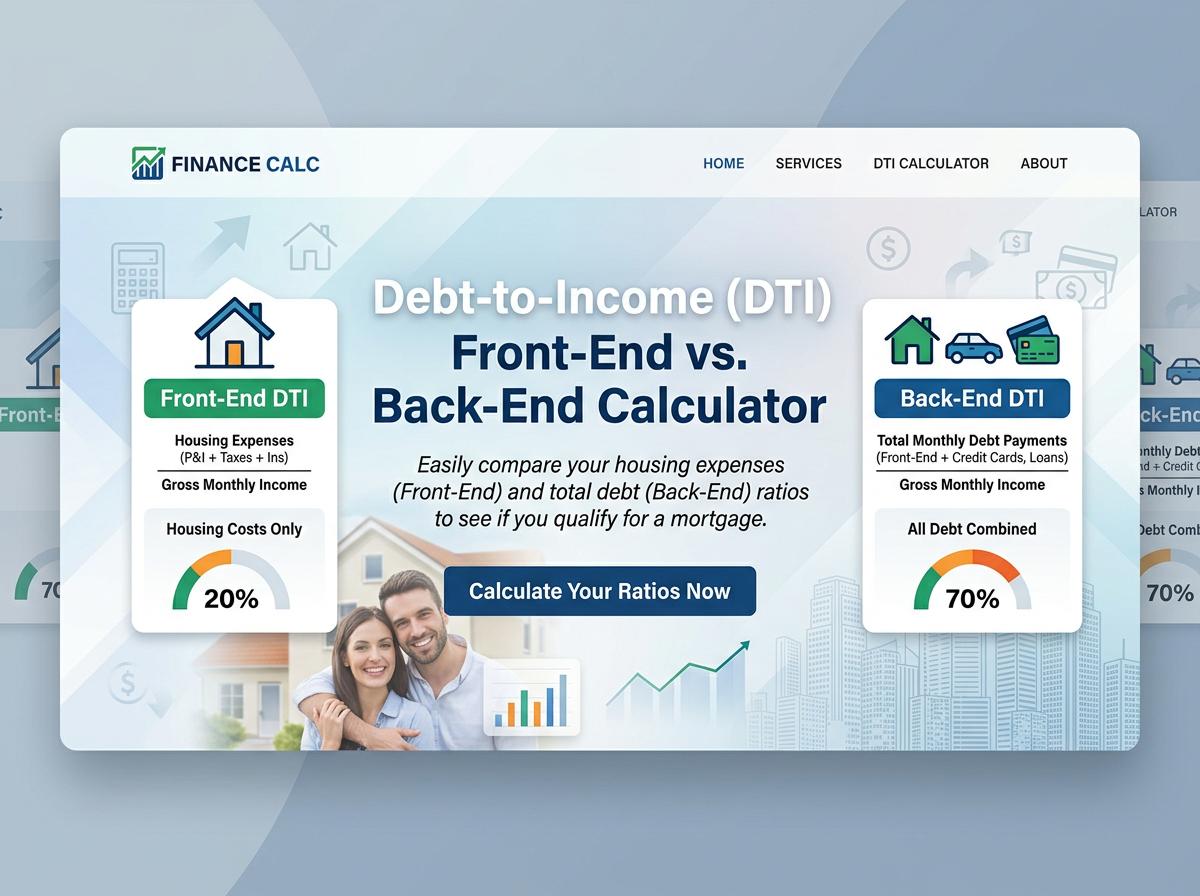 Debt-to-Income (DTI) Front-End vs. Back-End Calculator