
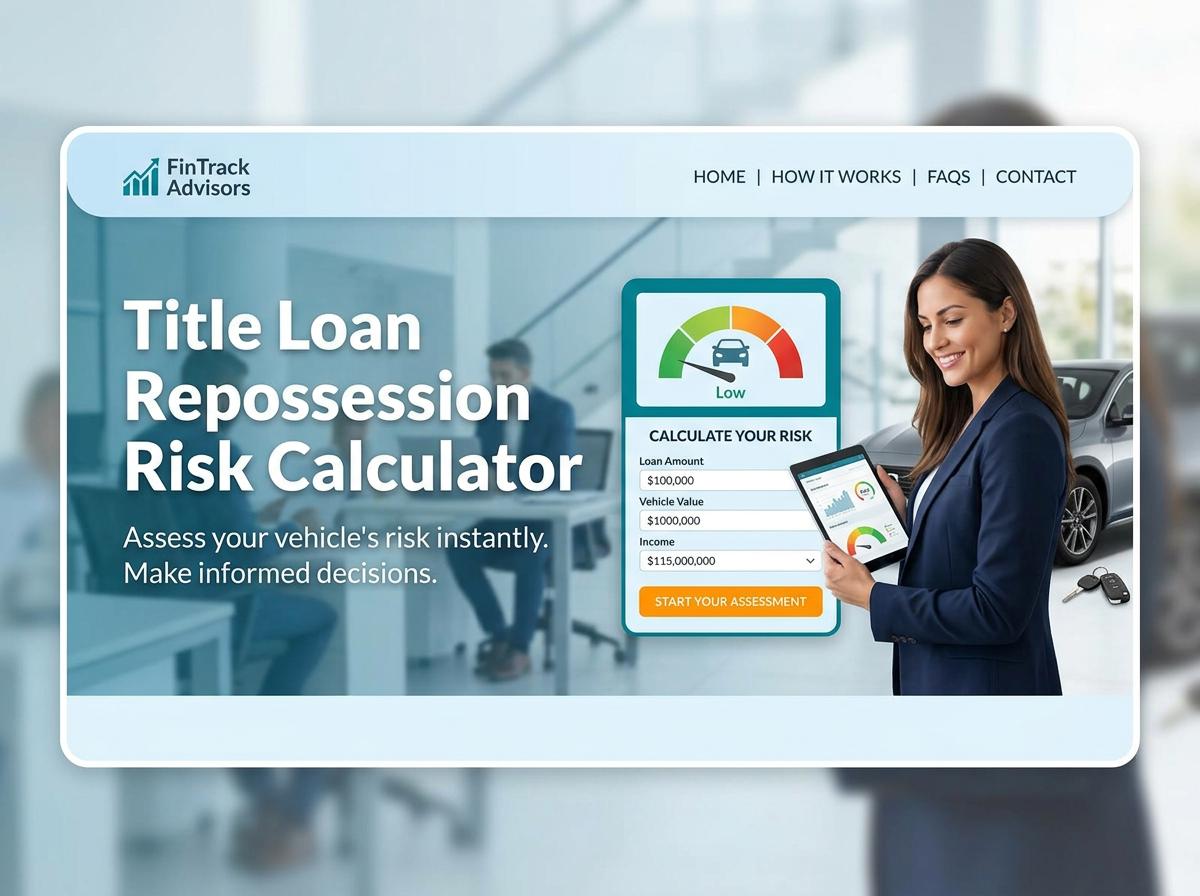

Worried about losing your car? Use our free Title Loan Repossession Risk Calculator to instantly assess your risk level. Enter your loan details to get personalized results and discover actionable steps to protect your vehicle from repossession today.
Title Loan Repossession Risk Calculator
How many missed payments trigger a vehicle repossession?
In most states, a lender can legally repossess your vehicle after just one missed payment. Once your payment is late, your loan is officially considered to be in "default."
However, the exact timeline depends heavily on your loan contract and the lender's internal policies. While some "buy here, pay here" dealerships or title loan companies may issue a repossession order within days of a missed payment, traditional banks and credit unions typically offer a grace period and may wait 30 to 90 days before sending a recovery agent. Always review your contract to see how "default" is strictly defined.
Will the lender notify me before taking my car?
Generally, no. In the vast majority of states, lenders are not required to give you any advance warning before repossessing your vehicle once you are in default. The element of surprise prevents borrowers from hiding the car or damaging it.
However, there are a few exceptions:
- Some states require a "Notice of Right to Cure," giving you a specific window (like 15 days) to catch up on payments before they can take the car.
- Once the car is actually repossessed, the lender is legally required to send you a written notice explaining what happens next, where the car is stored, and how you can get it back.
Can I negotiate a new payment plan to avoid repossession?
Yes, absolutely. Repossessing and selling a car is expensive and time-consuming for lenders, so they usually prefer to collect the money directly from you. If you know you are going to fall behind, contact your lender immediately to discuss your options.
Common negotiation outcomes include:
- Forbearance or Deferment: Pausing your payments for a month or two and adding them to the end of your loan term.
- Refinancing: Adjusting the interest rate or extending the loan term to lower your monthly payments.
- Modified Payment Plan: Temporarily reducing your payment amount while you get back on your feet.
What happens to my personal belongings inside the car?
When a car is repossessed, the recovery agency takes the vehicle, but they have no legal right to keep your personal, unattached belongings. You must be allowed to retrieve them, though you may have to pay a reasonable storage fee for the items.
| Item Type | Rule |
|---|---|
| Loose Items (Laptops, clothes, child car seats, tools) |
The repo agency must inventory these and return them to you upon request. |
| Attached Items (Custom stereos, upgraded rims, roof racks) |
Considered part of the vehicle. These become the property of the lender. |
What is the exact process for getting my repossessed car back?
You generally have a narrow window (often 10 to 15 days) to act before the lender sells the car at auction. The process typically involves these steps:
- Contact the Lender: Immediately call your lender to confirm the car was repossessed and ask for the exact balance required to release it.
- Choose a Recovery Method:
- Reinstatement: Pay the past-due balance, plus any late fees and repossession costs, to resume your normal loan.
- Redemption: Pay off the entire remaining loan balance, plus all repossession fees, to own the car outright.
- Pay the Fees: Submit guaranteed funds (cashier's check or wire transfer) to the lender.
- Retrieve the Vehicle: Take your release paperwork to the impound lot to pick up your car.
What extra towing and storage fees will I have to pay?
If you intend to get your vehicle back, you are responsible for paying all expenses the lender incurred while repossessing it. These costs add up very quickly and typically include:
- Towing / Recovery Fee: The cost paid to the repo agent to locate and tow your car (usually $200 to $500).
- Daily Storage Fees: The impound lot charges a daily fee for holding your car, which can range from $20 to $50+ per day.
- Administrative Fees: Lenders may charge fees for processing the default and sending mandatory legal notices.
- Personal Property Storage: Some lots charge an inventory and bagging fee for your loose belongings.
Do I still owe money if the car sells for less than my loan balance?
Yes. If you do not recover the vehicle, the lender will sell it (usually at a wholesale public auction) to recoup their money. If the sale price does not cover your remaining loan balance plus the repossession fees, the leftover amount is called a deficiency balance.
For example, if you owe $10,000 and the repossession fees are $1,000, your total debt is $11,000. If the car sells at auction for only $7,000, you are legally responsible for paying the remaining $4,000. The lender can send this deficiency to a collections agency or sue you to garnish your wages.
Will I receive the extra profit if the car sells for more than I owe?
Yes. Although it is incredibly rare in auto repossessions, if the vehicle sells at auction for more than your total outstanding debt, the resulting profit is called a surplus.
By law, the lender is not allowed to keep this extra money. After deducting your remaining loan balance, the towing fees, daily storage costs, and the costs associated with auctioning the car, any remaining funds must be mailed to you via a surplus check. The lender is required to provide you with a written accounting statement showing exactly how the sale proceeds were applied.
How severely will a title loan repossession damage my credit score?
A vehicle repossession is considered a major derogatory mark and will cause severe damage to your credit score. The impact typically includes:
- Score Drop: Your credit score can plunge by 60 to 100 points or more, depending on how high your score was initially.
- Long-Term Record: The repossession, along with the preceding late payments and any resulting collections for a deficiency balance, will remain on your credit report for seven years.
- Future Borrowing: It will be very difficult to get approved for future auto loans, and any lender that does approve you will likely charge exorbitant "subprime" interest rates.
What specific state laws protect my rights during a repossession?
While laws vary by state, all states enforce strict rules against a "breach of the peace" during a repossession. A recovery agent cannot legally:
- Use physical force or threats of violence against you.
- Break into a locked or enclosed garage to take the vehicle.
- Take the car over your physical protests (if you are present and object, they must leave and return later, potentially with a court order).
Additionally, state laws dictate the specific written notices you must receive regarding the sale of the vehicle, how your surplus or deficiency is calculated, and whether you have a legal right to reinstate the loan by paying only the past-due amount.
 Wage Garnishment Survival Calculator