
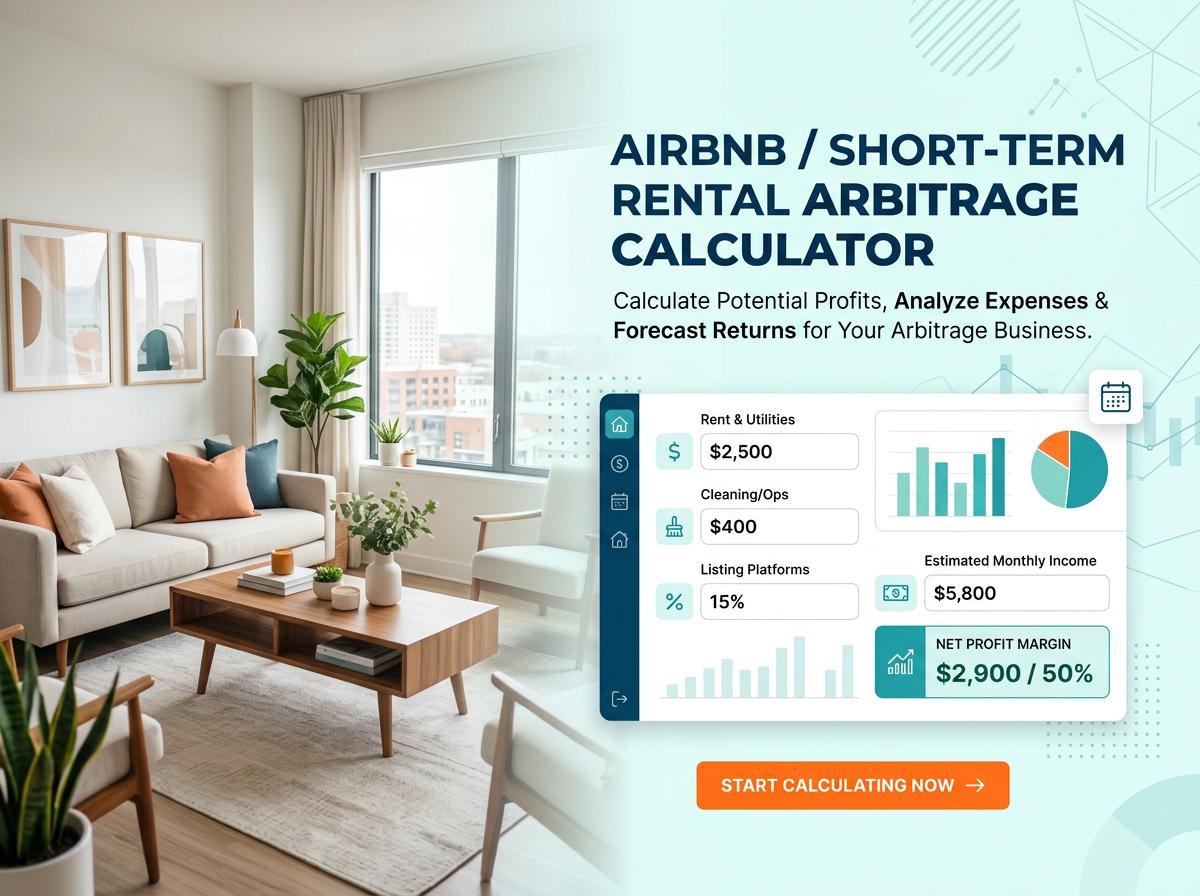

Maximize your profits with our Airbnb and Short-Term Rental Arbitrage Calculator. Instantly estimate setup costs, project monthly revenue, and calculate your exact ROI before signing a lease. Make data-driven decisions and find highly profitable rental properties today.
Rental Arbitrage Calculator
What are the specific local zoning laws and regulations for short-term rentals?
Depending on your city and county, short-term rental (STR) regulations vary drastically. You must consult your local planning or zoning department's website before signing any lease. Common regulatory aspects to investigate include:
- Zoning Restrictions: Many cities ban STRs in residential zones, limiting them strictly to commercial areas.
- Permits & Licenses: You often need a specific STR permit, a local business license, and tax registration.
- Occupancy Limits: Rules dictating the maximum number of guests allowed per bedroom or square footage.
- Primary Residence Rules: Some municipalities only allow you to rent out your primary residence, which makes rental arbitrage illegal.
Always verify local transient occupancy tax (TOT) requirements to ensure you are legally remitting taxes.
How do I legally pitch and convince a landlord to allow arbitrage?
Pitching rental arbitrage requires shifting the landlord's perspective from "risk" to "reward." Approach them as a corporate partner, not a standard tenant.
- Highlight Benefits: Emphasize guaranteed on-time rent, multi-year lease potential, and free professional cleaning multiple times a week.
- Address Wear and Tear: Explain that unlike traditional tenants, STR guests don't move heavy furniture, and your business covers minor maintenance.
- Provide Guarantees: Offer to carry robust commercial liability insurance and utilize strict guest screening technology.
- Draft a Proposal: Present a professional business plan detailing your daily operations, cleaning schedule, and insurance coverage.
Transparency is vital; never sub-lease without explicit, written landlord consent.
What specific clauses must be added to the corporate lease agreement?
A standard residential lease typically prohibits subletting. You must use a corporate lease or add specific addendums to operate legally. Essential clauses include:
| Clause | Description |
|---|---|
| Subletting / Arbitrage Right | Explicitly grants permission to sublease the property on short-term rental platforms like Airbnb or VRBO. |
| Commercial Use | Allows the residential property to be utilized for business purposes. |
| Maintenance Allocation | Details that the tenant handles minor repairs (e.g., under $150) while the landlord covers major structural/appliance issues. |
| Exit / Break Clause | Allows early lease termination with a predetermined penalty if local STR regulations change. |
How much capital is required for the initial furnishing and property setup?
The initial capital required depends on the property size and location, typically ranging from $5,000 to $15,000 for a 1-to-2-bedroom apartment. Your budget should account for:
| Expense Category | Estimated Cost (1-Bedroom) |
|---|---|
| Lease Acquisition | $3,000 - $6,000 (First month's rent + security deposit) |
| Furnishing & Decor | $4,000 - $7,000 (Beds, mattresses, sofas, rugs, art) |
| Kitchen & Linens | $800 - $1,500 (Pots, pans, coffee maker, multiple sheet sets) |
| Tech & Security | $300 - $600 (Smart locks, Wi-Fi router, noise monitors) |
Always maintain a reserve fund equal to at least two months of rent to cover slow seasons.
How do I accurately project nightly rates and average occupancy for a neighborhood?
Avoid relying on guesswork by utilizing data analytics tools and conducting manual market research.
- Use Software: Tools like AirDNA or PriceLabs provide historical data on average daily rates (ADR), occupancy rates, and seasonal trends for specific zip codes.
- Analyze Comparables (Comps): Search booking platforms for similar properties (same bed/bath count, amenities) in your exact neighborhood. Note their calendars to see booked versus unbooked days.
- Calculate Gross Revenue: Multiply the projected ADR by the expected monthly occupancy rate (e.g., $150/night x 20 days = $3,000).
- Factor Seasonality: Account for high and low seasons, ensuring your yearly average covers the fixed lease costs and yields a profit.
What type of commercial insurance is needed to protect against guest damage?
Relying solely on platform insurance (like Airbnb's AirCover) is highly risky for a corporate arbitrage business. You need comprehensive, independent coverage:
- Commercial General Liability: Protects against third-party bodily injury and property damage claims (e.g., a guest slips and falls).
- Short-Term Rental Insurance: Specifically designed for vacation rentals, covering periods when paying guests occupy the unit. Standard renter’s insurance will deny claims related to business operations.
- Loss of Income Coverage: Reimburses you for lost rental income if the property becomes uninhabitable due to a covered peril (e.g., fire or severe water damage).
Providing a copy of this commercial policy to your landlord is an excellent way to build trust.
How do I build a reliable system for automated guest communication and pricing?
Automation is essential for scaling an arbitrage business efficiently without burning out.
- Property Management Software (PMS): Platforms like Hospitable or Guesty centralize your calendars across multiple booking sites to prevent double bookings.
- Automated Messaging: Set up triggers within your PMS to automatically send check-in instructions, house rules, and checkout reminders at specific times.
- Dynamic Pricing Tools: Integrate software like PriceLabs. These algorithms automatically adjust your nightly rates based on local demand, seasonality, competitor pricing, and local events.
Coupling these software tools with a smart lock ensures a seamless, contactless check-in process for guests.
Who will handle the frequent cleaning and emergency maintenance tasks?
You must build a reliable local ground team to handle day-to-day operations.
- Specialized STR Cleaners: Do not hire standard residential house cleaners. You need STR-specific turnover specialists who understand how to stage the property, report guest damages, and restock inventory. Apps like Turno can help you find them.
- Handyman Services: Keep at least two reliable local handymen on call for minor repairs (clogged toilets, broken furniture) that fall under your lease responsibility.
- Emergency Contacts: Establish relationships with emergency plumbers and HVAC technicians for severe, after-hours issues.
Your cleaning team represents your eyes and ears on the ground; pay them well to maintain high quality.
Should I form an LLC to protect my personal assets from business liabilities?
Yes, forming a Limited Liability Company (LLC) is highly recommended for short-term rental arbitrage.
An LLC separates your personal assets (your savings, home, car) from your business liabilities. If a guest is injured on the property or a landlord sues for a breach of contract, they can typically only pursue the assets owned by the LLC.
Additionally, signing the corporate lease under your LLC adds professional credibility when pitching landlords. It also provides organizational benefits for tax deductions, allowing you to easily write off business expenses. Always consult a local CPA or business attorney to ensure the LLC is structured correctly.
What is the exit strategy if short-term revenues fail to cover the monthly rent?
Having a robust exit strategy minimizes financial ruin if the arbitrage model underperforms. Consider these contingencies:
- Medium-Term Rentals (MTR): Pivot to renting to traveling nurses, corporate workers, or displaced families for 30+ days. This often circumvents strict STR regulations and provides stable income.
- The "Break Clause": Negotiate an early termination clause in your lease. Paying a 1-to-2-month rent penalty is cheaper than being legally bound to a 12-month lease you cannot afford.
- Sell the Assets: Liquidate the furniture and decor on local online marketplaces to recoup some of your initial setup capital.
- Sublease Substitution: With landlord permission, find a traditional long-term tenant to take over the remainder of your lease.
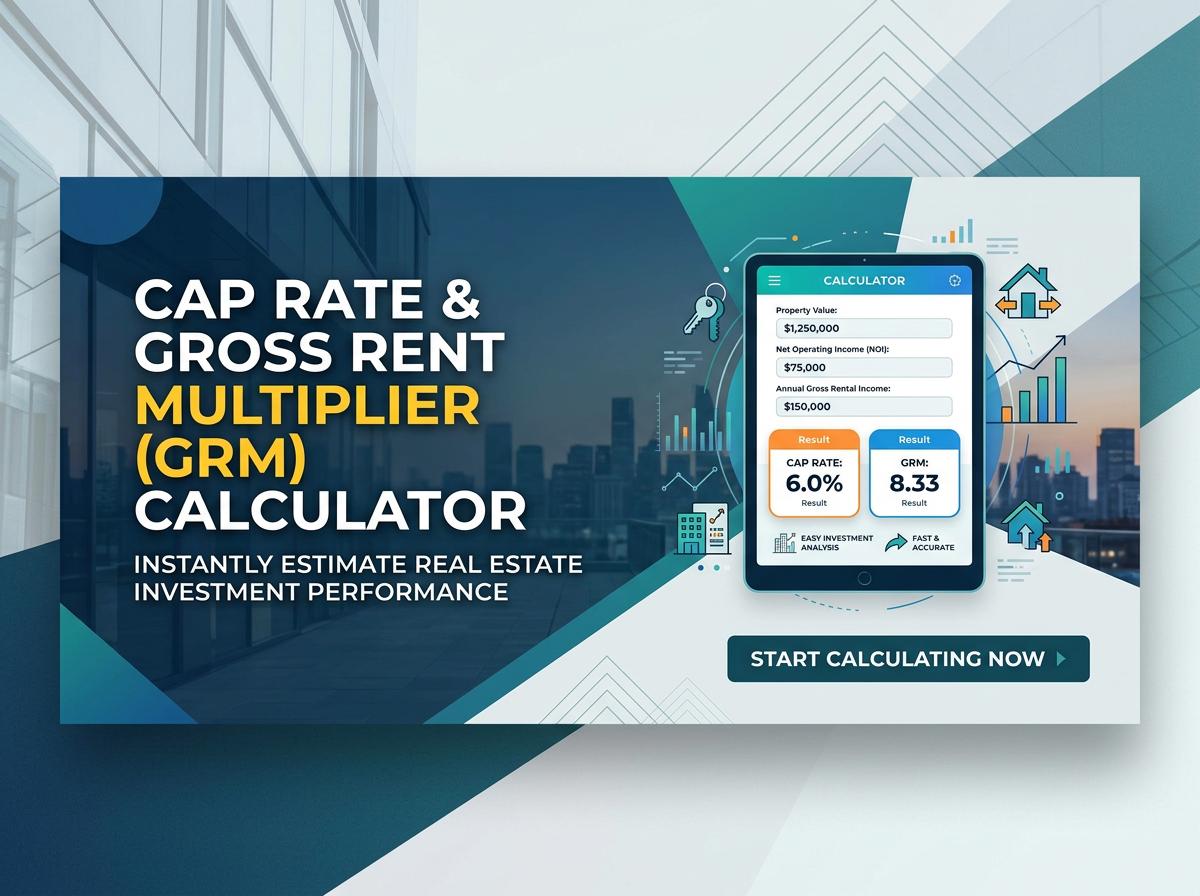 Cap Rate & Gross Rent Multiplier (GRM) Calculator