
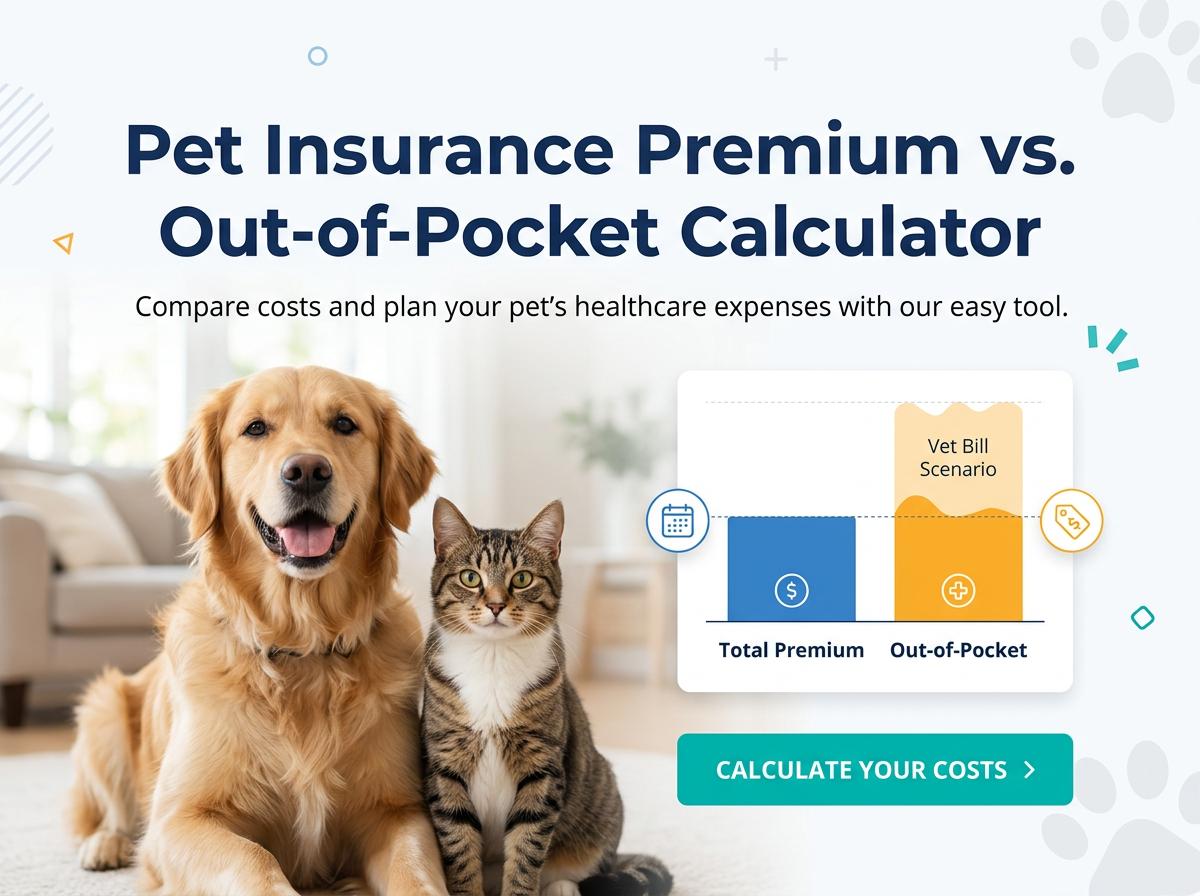

Compare pet insurance premiums versus out-of-pocket vet costs with our free calculator. Estimate potential savings and decide if coverage is worth it for your furry friend today!
Pet Insurance Calculator
How does a higher premium affect my out-of-pocket emergency costs
Choosing a higher monthly premium generally decreases your out-of-pocket emergency costs. Pet insurance policies are structured as a trade-off between fixed monthly costs and unexpected medical expenses. A higher premium typically provides:
- Lower Deductibles: You pay less upfront before your coverage kicks in.
- Higher Reimbursement Rates: The insurer covers a larger percentage of the bill (e.g., 90% instead of 70%).
- Higher Annual Limits: You are less likely to max out your coverage during a major emergency.
Ultimately, while you pay more each month to the insurance company, a major emergency will cost you significantly less at the veterinary clinic.
Is it cheaper to build a savings fund instead of paying monthly premiums
Whether a savings fund is cheaper depends on your pet's luck and overall health. While saving avoids monthly premium costs, it carries significant risk if a major illness occurs early in your pet's life.
| Method | Pros | Cons |
|---|---|---|
| Savings Fund | Keep the money if pet stays healthy; no claim denials or waiting periods. | May not have enough saved for an early or catastrophic emergency (e.g., a $5,000 surgery in year one). |
| Pet Insurance | Immediate financial safety net for large, unexpected medical bills. | Premiums are a sunk cost; total paid may exceed claims if the pet is rarely sick. |
If your pet lives a completely healthy life, saving is mathematically cheaper. However, insurance prevents financial ruin from sudden, massive bills.
Are deductibles paid annually or per incident on top of the premium
Deductibles are paid out-of-pocket in addition to your monthly premium, and how they are applied depends entirely on your specific insurance policy:
- Annual Deductibles: You pay this amount once per policy year, regardless of how many different incidents occur. Once met, the insurer reimburses you for the rest of the year. This is the most common model.
- Per-Incident (or Per-Condition) Deductibles: You pay a new deductible for every new illness or injury. However, once met for a specific chronic condition (like diabetes), you usually do not have to pay a deductible for that condition again in future years.
Always check your policy documents, as the deductible type drastically alters your financial obligations.
How do reimbursement percentages change my final out-of-pocket vet bills
Your reimbursement percentage determines the portion of the vet bill the insurance company pays after your deductible is met. Providers usually offer options like 70%, 80%, or 90%.
Here is how it calculates your final out-of-pocket cost:
- Start with the total eligible vet bill.
- Subtract your deductible (you pay this entirely out-of-pocket).
- Multiply the remaining balance by the reimbursement percentage (the insurer pays this).
- You pay the remaining percentage (your co-insurance).
For example, on a $1,200 bill with a $200 deductible and an 80% reimbursement rate: You pay the $200 deductible, leaving $1,000. The insurer pays 80% ($800), and you pay the remaining 20% ($200). Your total out-of-pocket is $400. A lower reimbursement percentage directly increases your final out-of-pocket costs.
Do premiums increase as my pet ages making out-of-pocket cheaper over time
Yes, pet insurance premiums almost always increase as your pet ages because older pets are statistically more prone to illnesses and require more veterinary care. However, this does not make your out-of-pocket vet visits cheaper over time.
Your out-of-pocket costs at the vet (deductibles and co-pays) remain dictated by your policy terms. While your monthly premium goes up, the reimbursement structure stays the same unless you modify your policy to lower the premium (e.g., by choosing a higher deductible), which would actually increase your out-of-pocket costs at the clinic.
Ultimately, both your monthly costs and the likelihood of needing to pay your out-of-pocket deductible increase as your pet enters its senior years.
Are pre-existing conditions always out-of-pocket regardless of the premium paid
In the vast majority of cases, yes. Pet insurance policies generally exclude pre-existing conditions, meaning any treatment for them will be a 100% out-of-pocket expense, regardless of how high your premium is.
However, insurers typically classify pre-existing conditions into two categories:
- Incurable Conditions: Chronic issues (e.g., diabetes, arthritis, hip dysplasia) diagnosed before coverage started are permanently excluded.
- Curable Conditions: Temporary issues (e.g., ear infections, minor injuries) may be covered in the future if your pet remains symptom-free and treatment-free for a specific period (usually 180 days to a year), depending on the insurer.
Always review a provider's specific rules on curable pre-existing conditions before signing up.
Does the premium cover routine care or is that strictly an out-of-pocket expense
A standard pet insurance premium only covers unexpected accidents and illnesses. Therefore, routine care—such as annual exams, vaccinations, flea/tick prevention, and dental cleanings—is strictly an out-of-pocket expense under a base policy.
However, many insurance companies offer optional "Wellness Plans" or "Routine Care Riders" for an additional monthly premium. If you purchase this add-on, the insurer will reimburse you for preventative care up to a certain annual limit.
Be aware that these wellness add-ons often function more like a forced budgeting tool than true insurance. You will need to calculate whether the additional premium costs more annually than simply paying for routine vet visits out-of-pocket.
What are my out-of-pocket risks if my pet exceeds the annual coverage limit
If your pet's medical bills exceed your policy's annual coverage limit, your out-of-pocket risks become absolute: you are responsible for 100% of all subsequent veterinary expenses for the remainder of the policy year.
For example, if you have a $5,000 annual limit and your pet requires an $8,000 emergency surgery, the insurance will only pay up to the $5,000 cap (minus deductibles and co-pays). You must pay the remaining $3,000 out-of-pocket, plus any other vet visits, medications, or emergencies that occur until the policy renews.
To mitigate this risk, many pet owners opt for policies with higher limits (e.g., $10,000) or unlimited annual payouts, though these options require a higher monthly premium.
How do co-pays factor into out-of-pocket costs after paying the premium
In pet insurance, the "co-pay" (or co-insurance) is the percentage of the vet bill you are required to pay out-of-pocket after your deductible has been met. It is the direct inverse of your reimbursement rate.
For instance, if your policy features an 80% reimbursement rate, your co-pay is 20%. Even though you have paid your monthly premium and met your deductible, you will still share a portion of every bill.
If you have an eligible $1,000 vet bill and have already met your annual deductible, the insurance company covers $800, and your co-pay mandates that you pay the remaining $200 out-of-pocket. Choosing a plan with a 0% or 10% co-pay will minimize these costs but significantly increase your premium.
Will the total premiums paid over a pet's lifetime exceed average out-of-pocket medical costs
Statistically, for the average healthy pet, the total premiums paid over a lifetime will exceed the out-of-pocket medical costs they would have incurred. Insurance companies intentionally price their premiums to ensure they remain profitable across their broad customer base.
If your pet only ever needs standard care and minor treatments, you will likely pay more in premiums than you get back in reimbursements.
However, pet insurance is designed for risk mitigation, not investment returns. The value lies in protection against catastrophic, unpredictable expenses—like a $10,000 cancer treatment or severe accident. While you might "lose" money on a healthy pet, insurance ensures you never have to choose between your finances and saving your pet's life in a major crisis.
 Wedding Debt Payoff Calculator