
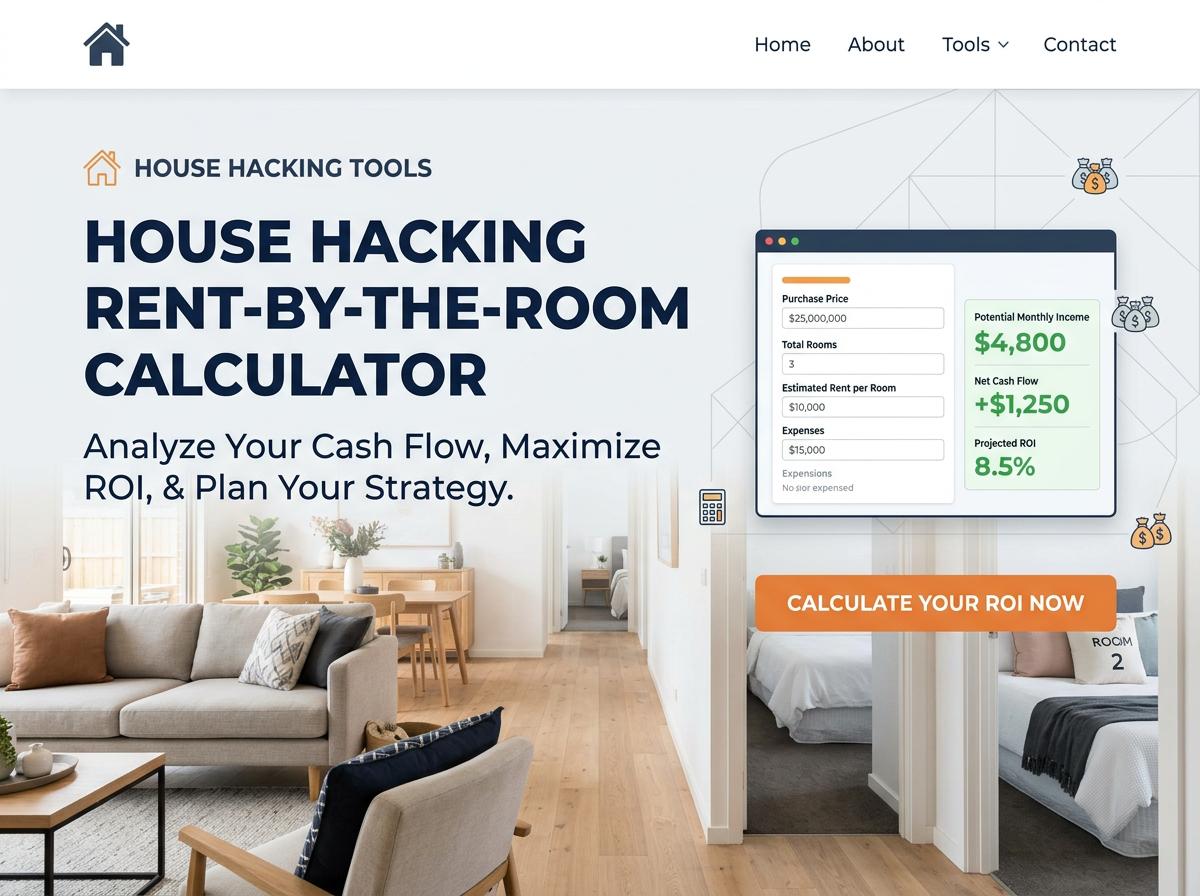

Maximize your real estate ROI with our House Hacking Rent-by-the-Room Calculator. Easily estimate cash flow, analyze expenses, and project per-bedroom rental income to achieve financial freedom. Start analyzing potential properties today!
House Hacking Calculator
What are the local zoning laws regarding unrelated adults living together in one house?
Zoning laws strictly regulate how many unrelated adults can legally occupy a single-family dwelling. These ordinances vary drastically depending on your local municipality.
- Common Limits: Most cities cap the number of unrelated adults at 3 to 5 per household to prevent overcrowding.
- College Towns: Often have stricter ordinances (e.g., a maximum of 2 or 3 unrelated persons) to prevent "stealth dorms."
- Penalties: Violating these limits can result in hefty fines, mandatory eviction of your tenants, and the loss of your rental license.
Always consult your city or county's zoning board and read the municipal code under "occupancy limits" before you begin renting out multiple bedrooms.
How do I thoroughly screen tenants who will be sharing my personal living space?
Screening housemates requires assessing both financial reliability and lifestyle compatibility. Follow these crucial steps to ensure a safe living environment:
- Pre-screening Questionnaire: Ask about work schedules, pet preferences, smoking habits, and cleanliness standards before even showing the room.
- Formal Application: Require a complete application detailing employment history and prior landlord references.
- Background & Credit Check: Use tenant screening services to verify credit scores, criminal history, and past evictions.
- In-person Interview: Meet over coffee or at the house to gauge personality fit, communication style, and mutual expectations.
- Verify Income: Ensure their monthly income is at least 2.5 to 3 times the room's rent price.
What is the best method for splitting and billing utilities among multiple housemates?
Handling utilities effectively prevents disputes. Landlords generally use one of three main methods:
| Method | Pros | Cons |
|---|---|---|
| Flat Fee (Included in Rent) | Simplest to administer; highly attractive to renters. | Landlord absorbs costs if tenants excessively waste energy. |
| Even Split (Pro-rata) | Fair distribution based on actual monthly utility usage. | Requires monthly math; difficult if tenants move mid-month. |
| Ratio Utility Billing (RUBS) | Bills based on room size or headcount. | Can feel unfair if one person uses significantly more resources. |
The most frictionless method is usually charging a slightly higher flat rent that covers all utilities, while adding a "cap" clause in the lease (e.g., landlord covers up to $300/mo, tenants split any overage).
How should I structure a lease agreement specifically for an individual bedroom?
When renting by the room, you should use an individual lease (often called a Room Rental Agreement) rather than a joint-and-several lease. This ensures each tenant is solely responsible for their own rent and actions.
Your lease must clearly define:
- Exclusive Space: The specific bedroom the tenant is renting (e.g., "Bedroom A, Northeast corner").
- Common Areas: Granted access to shared spaces like the kitchen, living room, and specific shared bathrooms.
- Guest Policy: Strict limits on overnight guests (e.g., maximum 3 nights per month) to prevent unauthorized occupants.
- Utility Responsibilities: Exactly how utilities are calculated, billed, and when they are due.
Will my standard homeowner insurance policy cover rent-by-the-room tenants?
No, a standard homeowner's insurance policy will rarely cover rent-by-the-room scenarios. Standard policies are designed for single families or owner-occupied homes without business activities.
If you rent out rooms, you must notify your insurance provider. You will typically need to switch to a Landlord Policy or add a specific endorsement for a "unit rented to others." Failure to do so can result in your policy being canceled or claims being denied if a tenant causes a fire or injury.
Additionally, you must require every tenant to purchase their own Renter's Insurance policy to cover their personal belongings and personal liability, as your landlord policy will not cover their items.
What rules should I establish for shared spaces like the kitchen, living room, and bathrooms?
Clear boundaries are essential for peaceful cohabitation. Include a "House Rules" addendum in your lease covering these core areas:
- Kitchen: Assign specific cabinet spaces and refrigerator shelves to each room. Mandate that all dishes must be washed or placed in the dishwasher within 24 hours of use.
- Bathrooms: Prohibit leaving personal toiletries on shared counters. Institute maximum shower times during morning rush hours if necessary.
- Quiet Hours: Establish designated quiet times (e.g., 10 PM to 7 AM on weekdays) for the living room and shared walls.
- Personal Items: Rule that common areas must remain free of personal clutter, such as laundry, shoes, and mail.
How do I determine the fair market rental price for bedrooms of different sizes?
Pricing individual bedrooms requires a localized approach rather than simply dividing the whole-house rent by the number of rooms. Follow these steps:
- Check Comparables: Browse marketplace sites to see what similar rooms in your specific zip code are renting for.
- Adjust for Base Size: Start with a baseline price for a standard room (e.g., 10x10 feet).
- Add Premiums: Increase the price for desirable features. Add 15-25% for an en-suite private bathroom, 5-10% for a walk-in closet, or a premium for a private exterior entrance.
- Discount for Drawbacks: Lower the price for smaller rooms, basement rooms, or rooms sharing a bathroom with multiple people.
What is the most effective way to handle and enforce cleaning responsibilities for common areas?
Relying on a "chore chart" among unrelated adult tenants rarely works and is the number one cause of housemate friction.
The most effective method: Hire a professional cleaner to clean the common areas (kitchen, living room, shared bathrooms) once or twice a month. Increase the room rent by $30-$50 per tenant to easily cover this expense.
If you must rely on tenants, create a rotating chore schedule explicitly outlined in the lease. Enforcement requires regular inspections. State in the lease that if the house fails a cleanliness inspection, a professional cleaner will be hired and the cost will be billed back to the tenants equally.
How do I mediate conflicts, noise complaints, or personality clashes between renters?
As the landlord, you must remain objective and rely on your written lease rather than playing referee to petty disputes. Here is the mediation process:
- Encourage Direct Communication: Require tenants to attempt to resolve minor issues respectfully and directly before involving you.
- Reference the Rules: If a complaint is made (e.g., noise), refer directly to the specific quiet hours clause in your lease.
- Issue Written Warnings: For verifiable lease violations, issue formal written notices. Treat all tenants equally to avoid discrimination claims.
- Offer an Out: If personality clashes are irreconcilable and disrupting the house, offer to let one party break their lease and move out without a financial penalty.
What are the specific tax implications and deductions for renting out rooms in a primary residence?
Renting out a room turns part of your primary residence into a business, requiring you to report rental income on IRS Schedule E. However, it also unlocks significant tax deductions.
Expenses must be divided between personal use and rental use, usually based on the home's square footage:
- Direct Expenses: 100% deductible. This includes repairs made specifically inside the rented bedroom or advertising costs for the room.
- Indirect Expenses: Partially deductible based on the rental percentage (e.g., if the room is 15% of the house's square footage, you can deduct 15% of utilities, internet, mortgage interest, and property taxes).
- Depreciation: You can depreciate the rented portion of the home's value over 27.5 years, which significantly lowers your taxable rental income.
Sources:
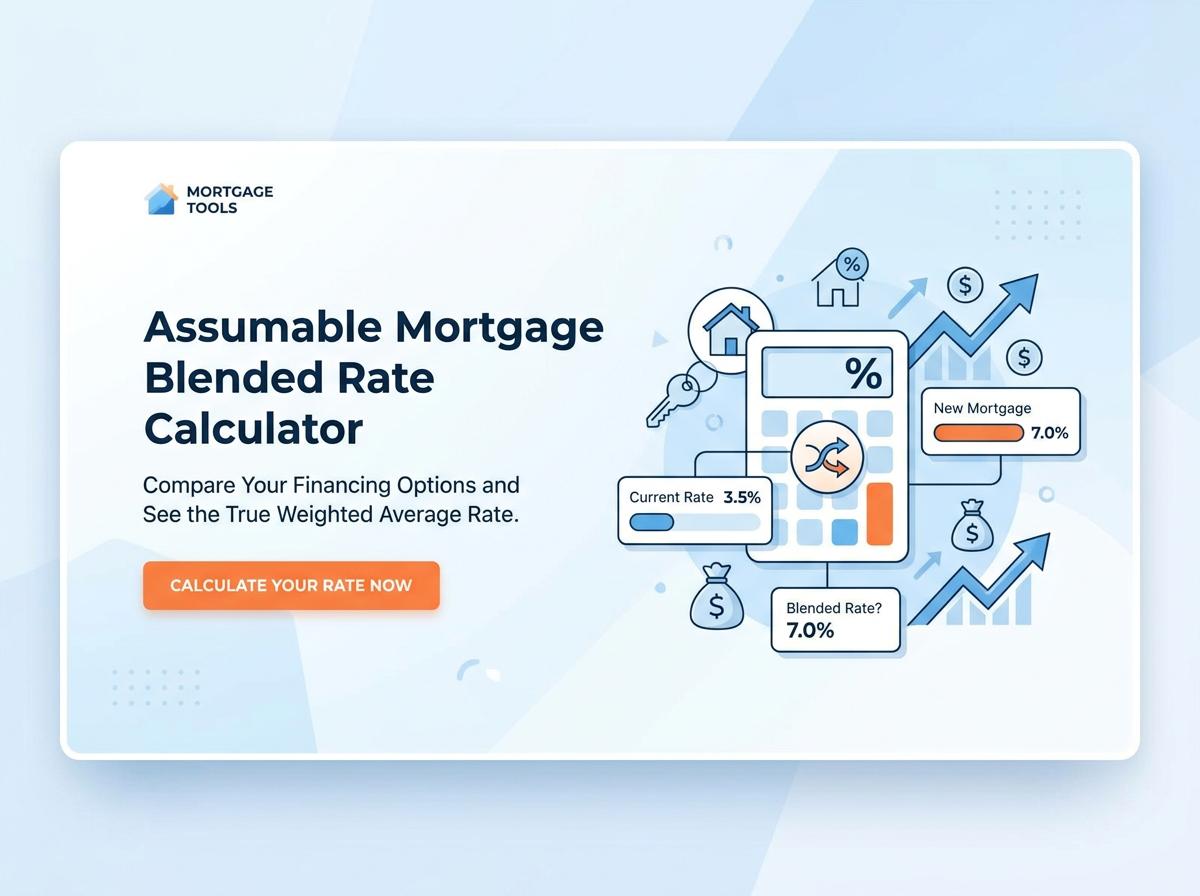 Assumable Mortgage Blended Rate Calculator